Why we love domestic hardwoods
Daniel BallardComing soon7 min read
Cherry, walnut, white oak, maple — what makes each one special, and how to choose for your home.
We source almost everything from within a few hundred miles of the shop. Domestic hardwoods are stable, sustainable, and — once you get to know them — each one has a personality that shows up in the finished piece. Here's how we think about the four we use most.
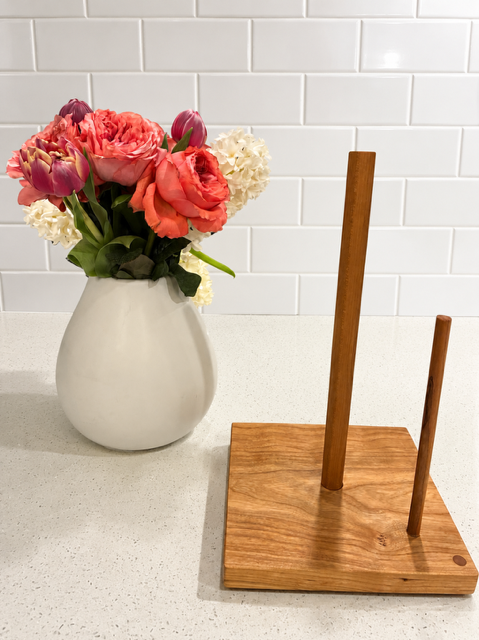
Cherry starts pale, almost pinkish, and darkens dramatically in its first year of light exposure. A board that's nearly blonde when it leaves the shop will be a deep reddish brown by the next summer. It's a soft hardwood — easy to work, takes a finish beautifully — and the color shift means the piece is a little different every season. We love it for serving boards and small furniture that lives in a sunny room.
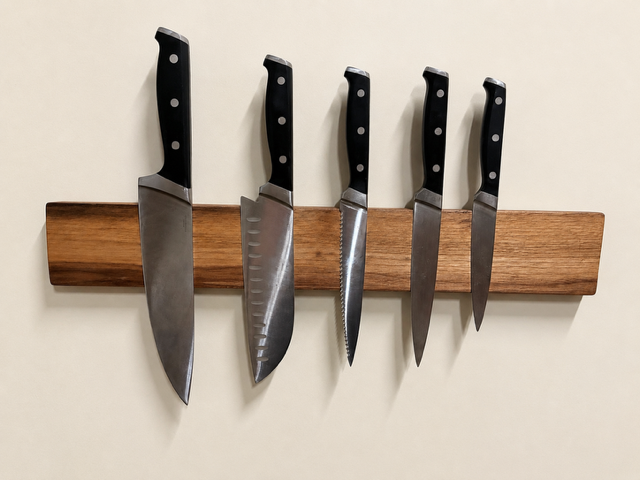
Walnut is the headline wood for a reason. Rich, chocolate-brown heartwood, often with a ribbon of cream-colored sapwood that we leave in on purpose. It's harder than cherry but still cooperative, and the figure — the way the grain catches light — is unmatched. Walnut is what we reach for when a piece needs to feel like an heirloom from day one.
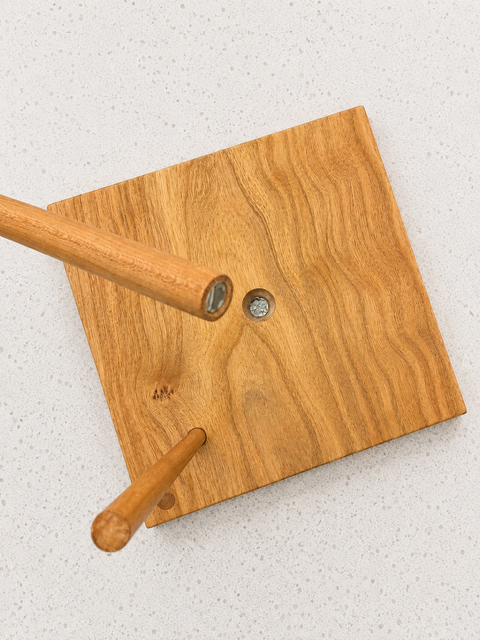
White oak is the workhorse. Dense, water-resistant (the cell structure is naturally closed), and it ages to a warm honey color that pairs with almost any room. The grain is open and tactile — you can feel the ray flecks under your fingers — and it's our first choice for anything that has to take a beating: kitchen utensils, daily-use cutting boards, the bases of larger furniture.
Hard maple is bright, almost creamy, with a tight grain that resists knife marks better than anything else we use. It's our default for end-grain cutting boards and for pieces where the customer wants the wood to disappear and let the food do the talking. Curly or birdseye figure shows up in maple more than any other species, and when it does, we save those boards for something special.
There's no wrong answer. Think about the room — warm light loves walnut, cool light loves maple — and think about how the piece will be used. For a daily kitchen tool, choose oak or maple. For something to display and use occasionally, walnut or cherry will reward you. And if you're not sure, ask. We'll talk you through it.